How Gamification in Reading Turns Every Story into a Rewarding Adventure
Every parent knows the challenge: your child will happily spend an hour exploring a game on a tablet, yet the moment you suggest reading a book, the enthusiasm vanishes. What if that same spark of excitement could be channeled into reading? That is exactly what gamification in reading makes possible, and the results are transforming how children engage with stories around the world.
Gamification takes the motivational elements that make games so compelling and weaves them into the reading experience. Think of progress tracking, rewards for milestones, collectible items, and a sense of accomplishment after every completed challenge. When applied thoughtfully to reading, these elements do not distract from the story. Instead, they give children a reason to keep turning pages, building a habit that grows stronger with every session.
What Is Gamification and Why Does It Work for Young Readers?
At its core, gamification means applying game design principles to activities that are not traditionally games. In education, this approach has gained enormous traction because it taps into fundamental aspects of human motivation: the desire for achievement, progress, and recognition.
Research from the University of Colorado found that gamified learning environments can boost motivation and retention by up to 50% compared to traditional methods. For children, whose brains are wired to respond strongly to immediate feedback and rewards, the effect is even more pronounced. When a child earns a star after finishing a story, that moment of recognition reinforces the effort they just made. Over time, these small celebrations create a positive association with reading that compounds into a lasting habit.
Furthermore, gamification works because it meets children where they already are. Today’s kids grow up surrounded by interactive digital experiences. Rather than fighting that reality, gamification in reading embraces it and transforms screen time into meaningful literacy practice.
Stars, Rewards, and the Power of Small Wins
One of the most effective gamification strategies is the concept of small wins. Instead of asking a child to read an entire book before feeling any sense of accomplishment, gamified reading apps break the journey into manageable milestones. Completing a story earns a star. Finishing a mission unlocks a reward. Every session ends with visible proof of progress.
This matters because children, especially younger readers, struggle with delayed gratification. A star earned today is far more motivating than the abstract promise of becoming a better reader someday. These small victories keep momentum alive and prevent the frustration that often causes children to abandon reading altogether.
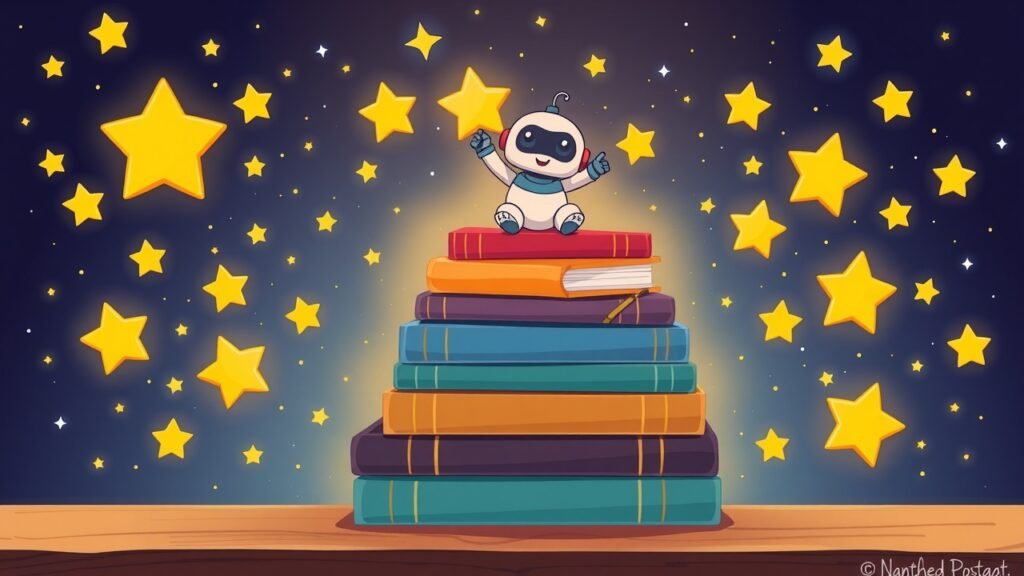
In ReadLegend, for example, readers earn stars every time they complete a story or accomplish a mission in the app’s Mission Mode. Each star represents a tangible achievement that the child can see and celebrate, turning what might have been a passive activity into an active pursuit of goals.
Unlockable Avatars: Giving Readers Something to Work Toward
Beyond immediate rewards, gamification also thrives on longer term goals. This is where collectible and unlockable content plays a crucial role. When children know that earning enough stars will unlock a new animated avatar, they are not just motivated to read one more story. They are motivated to read consistently, session after session, because each completed story brings them closer to something exciting.
Unlockable avatars work on the same psychological principle that drives collectors of all ages: the joy of building a set, the anticipation of the next discovery, and the pride of displaying achievements. For children, a new animated avatar is not just a digital reward. It becomes part of their identity within the app, a character that represents their reading journey and accomplishments.
ReadLegend uses this approach by offering a growing collection of animated avatars that readers unlock as they accumulate stars. The avatars are vibrant and appealing, giving children a personal stake in their reading progress. Furthermore, because the avatars require sustained effort to unlock, they naturally encourage strong reading habits rather than one time bursts of activity.
The Psychology Behind Reading Rewards
Some parents and educators worry that external rewards might undermine a child’s intrinsic love of reading. This is a valid concern, and the research offers an important nuance. According to a meta analysis published in the journal Psychological Bulletin, external rewards can diminish intrinsic motivation when they feel controlling, but they actually enhance motivation when they provide informational feedback about competence.
In other words, a reward that says “you did it!” strengthens a child’s belief in their own ability. A star earned after completing a challenging story tells the child that they are capable, that their effort mattered, and that reading is something they can succeed at. Over time, this self confidence becomes its own motivation, and the external rewards become a bonus rather than the primary driver.
The key is designing rewards that celebrate effort and completion rather than speed or competition. The best gamified reading experiences, including ReadLegend, reward every child equally for finishing a story, regardless of how long it took or how many attempts they needed. This approach builds a growth mindset and ensures that every reader feels successful.
How Gamification Supports Different Types of Readers
One of the greatest strengths of gamification in reading is its ability to reach children who might otherwise disengage from books entirely. Consider these different reader profiles:
- Reluctant readers who find traditional books boring benefit from the sense of adventure and achievement that gamified reading provides. The promise of earning a star or unlocking a new avatar gives them a concrete reason to start reading.
- Struggling readers who lack confidence gain encouragement from the positive feedback loop. Every completed story, no matter how short, earns the same celebration and reward, reinforcing the message that they are capable readers.
- Advanced readers who crave challenge find motivation in collecting all available avatars and exploring every story path. Gamification adds depth to the reading experience without simplifying the content.
- Multilingual readers who are developing skills in more than one language benefit from the extra motivation that rewards provide. Reading in a second or third language is inherently more difficult, and gamification helps children push through that challenge with enthusiasm rather than frustration.
This versatility makes gamified reading particularly valuable for families and classrooms with diverse learner profiles. Instead of a one size fits all approach, gamification meets each child at their own level and celebrates their individual progress.
Beyond Stars: How Gamification Builds Lifelong Readers
The ultimate goal of gamification in reading is not to create children who read only for rewards. It is to create children who develop such a strong reading habit that the rewards become secondary to the joy of the stories themselves. Research on habit formation, including studies published by the American Psychological Association, shows that consistency is the single most important factor in building any lasting behavior.
Gamification excels at creating consistency. When a child knows that every reading session earns progress toward a goal, they are far more likely to read regularly. And once regular reading becomes a habit, the cognitive benefits take hold: improved vocabulary, stronger comprehension, better focus, and greater empathy. At that point, children read because they genuinely enjoy it, with the stars and avatars serving as a fun extra rather than the main attraction.
How ReadLegend Uses Gamification to Inspire Young Readers
ReadLegend brings gamification in reading to life through a carefully designed reward system that motivates without overwhelming. Here is what makes it work:
- Stars are earned after completing every interactive story and every Mission Mode adventure, giving readers frequent moments of achievement.
- Animated avatars are unlocked as children collect enough stars, providing exciting longer term goals that encourage consistent reading.
- Mission Mode transforms stories into explorable adventures where children solve puzzles, collect objects, and make choices, making the reading experience feel like a game without sacrificing educational value.
- Progress is always visible, so children can see how close they are to their next avatar and feel motivated to keep reading.
- Every reader is celebrated equally, with rewards based on completion and effort rather than speed or competition.
Because ReadLegend also supports interactive reading with AI powered storytelling in 15 languages, the gamification layer adds motivation on top of an already engaging experience. Children are not just earning stars. They are exploring worlds, making meaningful choices, and building literacy skills in ways that feel like play.
Conclusion
Gamification in reading is not about tricking children into reading. It is about recognizing how motivation works and using that understanding to create experiences that children genuinely want to return to. When every completed story earns a star, and every collection of stars brings a new animated avatar to life, reading stops being a chore and becomes an adventure worth pursuing. The journey from reluctant reader to enthusiastic bookworm often begins with a single star, and that is a beginning worth celebrating. Start the adventure on ReadLegend.